
Product titles: how customers search, not what you call them

Photo: Avila Ops Tecnologia
Product titles need the phrase customers would type into Google. “Lightweight women’s running shoes,” not “Aurora Model.” “Hibiscus tea 100 g,” not “Red Blend.” Internal names can appear afterward. Google and store search read titles first; without the searched term, products do not appear.
The catalog’s most important text gets the least attention. Changing it costs nothing. Correct titles put pages in search without ads; creative titles hide products from ready buyers.
What is the title formula?
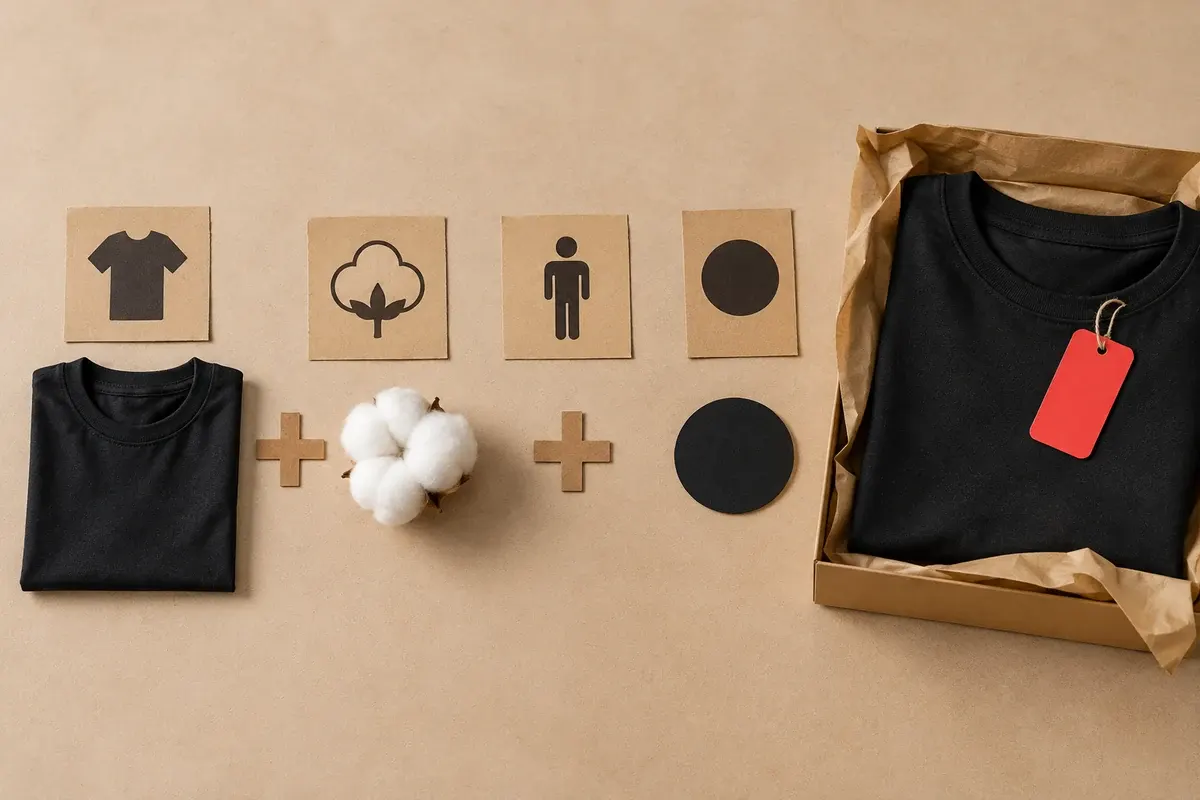
Photo: Avila Ops Tecnologia
An order working for almost every product:
Product type + main attribute + brand or material + variation
- “Basic men’s black cotton T-shirt”
- “Breakfast basket with homemade cake, 12 items”
- “Adjustable white LED desk lamp”
- “Set of 3 airtight glass containers 500 ml”
Type comes first because people search it. The main attribute differentiates: lightweight, sugar-free, adjustable. Brands belong only when customers search them. Variation, color, size or quantity, comes last.
Exclude empty adjectives such as “beautiful” and “amazing,” all caps, leading internal codes and invented names unless customers already search them. If “Aurora Model” has fans, put it last: “Lightweight women’s running shoes, Aurora.”
How do you discover customers’ words?
Do not guess. Discover them free:
- Google search. Type the product type and inspect suggestions before Enter. These are real searches.
- “People also ask” and related searches at the results page bottom.
- WhatsApp messages. How customers write, such as “do you have that long-sleeve top?”, is how they search.
- Your store search. Many platforms record queries and no-result searches. These show missing products or products listed under other names.
When two terms compete, such as “sweatshirt” and “warm top,” use the commoner one in titles and the other in descriptions. How to make your company appear on Google explains Google’s selection.
Mistakes hiding products
| Mistake | Example | Fix |
|---|---|---|
| Leading internal name | “REF 2231 T-shirt” | “Basic black cotton T-shirt, ref. 2231” |
| Only own-brand name | “Serena Line” | “Facial moisturizer for dry skin, Serena Line” |
| Identical variation titles | Ten pages called “Scented candle” | “Lavender scented candle 200 g” and so on |
| All caps | “PERSONALIZED MUG” | “Personalized ceramic mug 325 ml” |
| Excessive length | More than 60 characters | Cut nonsearch wording; put the rest in descriptions |
Titles and categories work together: categories serve broad searches, “teas,” and titles specific ones, “hibiscus tea 100 g.” See What store categories do. Descriptions serve another purpose, covered in Product descriptions that sell without rambling.
What to do now
Export store titles and mark those starting with codes, line names or adjectives. Rewrite first using the formula, beginning with your 20 best sellers. Websites and stores Google understands, with Search Console configured to show searches: avilaops.com/presenca-digital-para-pequenas-empresas or contact us on WhatsApp: wa.me/5517997811471.
Frequently asked questions
How many characters should a product title have?
Forty to sixty usually fits Google and store displays. Put most-searched words first because endings may be cut.
Should I include the brand?
Only if customers search it. For little-known own brands, lead with product type and put the brand last or in descriptions.
Do product titles help Google visibility?
They are a direct factor. Google reads titles as page subjects. Without the searched word, pages rarely appear for it. Nobody can promise rankings, but wrong titles make absence likely.
Turn what you learned into your next step.
Tell us about your company and what you want to improve. We can explore the right tools, integrations or custom project together.