
Small teams on Black Friday: who does what
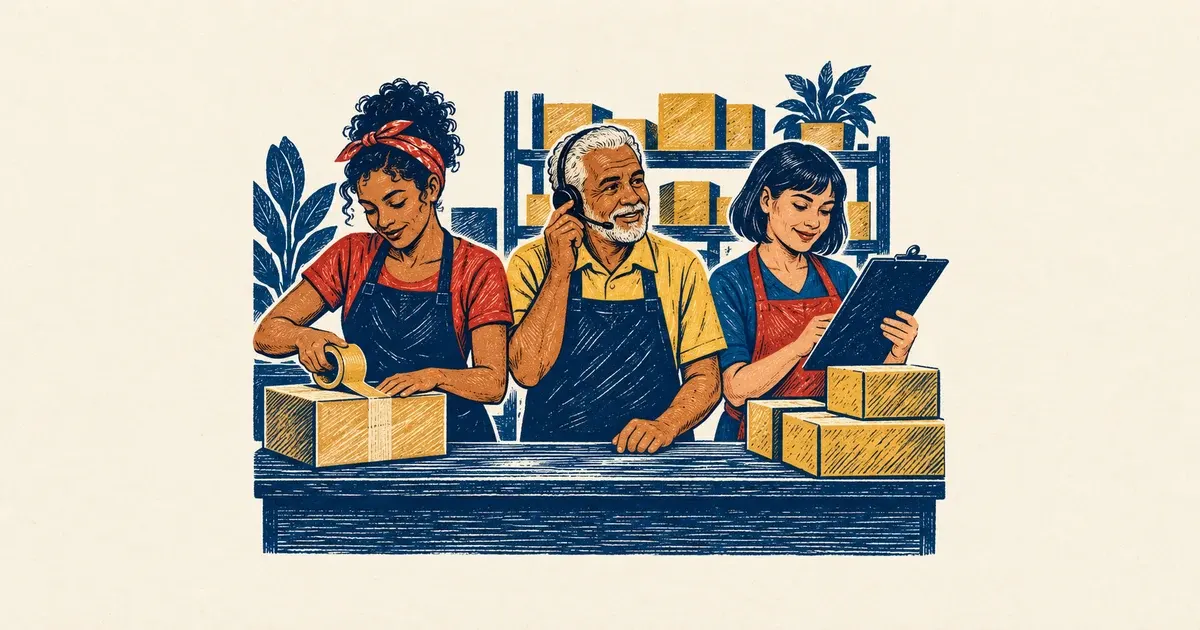
Photo: Avila Ops Tecnologia
With two or three people, Black Friday works when everyone has one written role and does not switch mid-day. One handles orders: pick, pack, dispatch. Another handles service: WhatsApp, email, social media. The owner decides: stockouts, escalated problems, ads on or off. When everyone does everything, orders ship incorrectly while messages go unanswered.
Each role needs a written process and a test week, so assign roles in October. What remains afterward is the automation list to finish before November.
How do you divide work with two people?
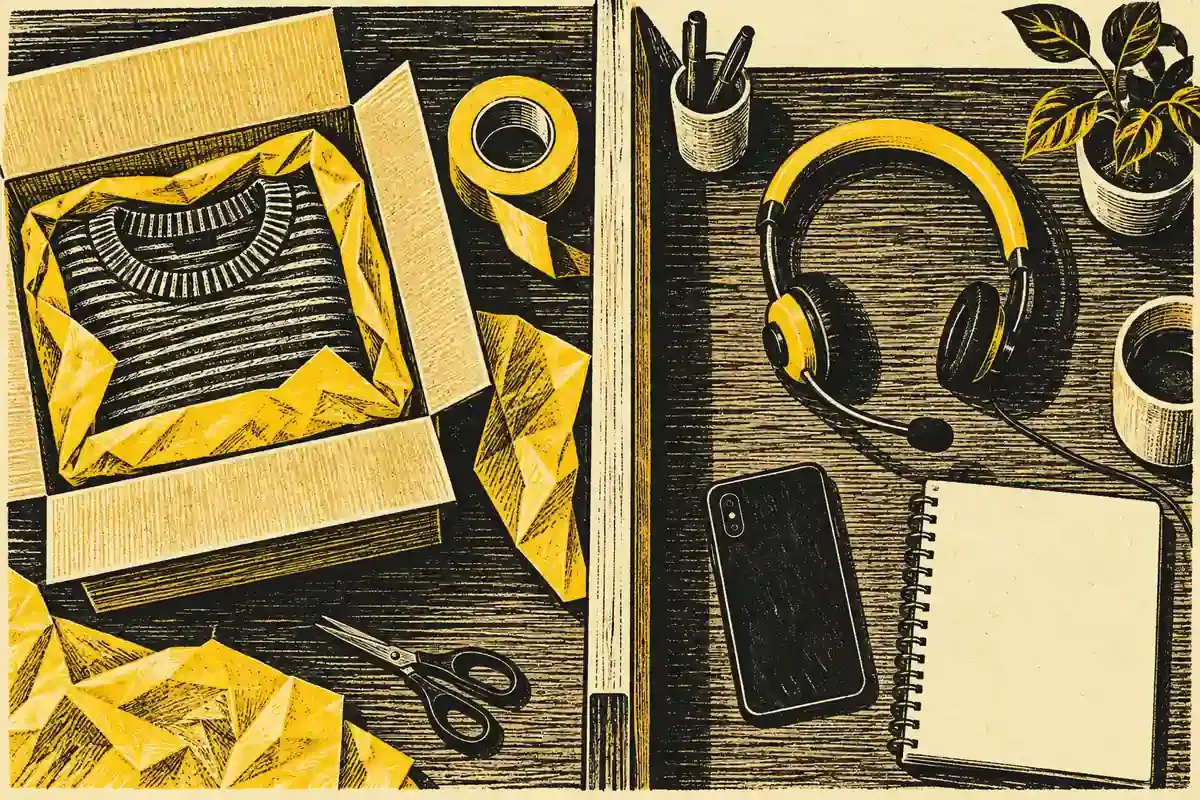
Photo: Avila Ops Tecnologia
Orders and service. Order pickers do not open WhatsApp; service staff do not enter the stockroom. The rule seems rigid but prevents the common peak-time error: packers stop again to answer a message, return, and put the wrong product in the box.
If the owner is one of the two, they handle service because decisions arise there. The other handles orders, requiring concentration rather than decisions. When both queues grow, service waits; today’s shipment matters more than answering in 10 minutes rather than 40.
How do you divide work with three people?
| Role | Does | Does not do |
|---|---|---|
| Orders | Picks, checks, packs, prints labels, dispatches | Answer customers or change prices |
| Service | Answers WhatsApp and email, updates status, records problems | Pick orders or promise timing different from published deadlines |
| Decisions (owner) | Stock, advertising, exceptions, serious complaints, cash flow | Pack or answer common questions |
The third person, if available, helps orders on highest-volume days and service otherwise. The order picking guide details that role step by step; peak-time service covers customer service.
What hours and shifts should you set?
Pick orders in two fixed blocks, for example 8 to 11 a.m. and 2 to 4 p.m., dispatching at 4:30 p.m. Nobody picks outside blocks; an 11:30 a.m. order goes in the afternoon batch. This prevents fragmented picking, where errors arise.
Publish service hours with an agreed break and automatic after-hours messages. During Black Friday week, extend hours to 8 or 9 p.m., with service staff compensating the next morning.
The owner reviews three numbers twice daily: paid unshipped orders, conversations unanswered over two hours, and campaign-product stock. If any exceeds agreed limits, redistribute people for one hour.
What should you automate to free people?
Everything repetitive requiring no decision: customer payment confirmations, invoices and labels generated from orders, tracking sent at shipment, answers to five common questions, internal minimum-stock alerts. Each manual task takes minutes per order; with 60 daily orders, that is hours.
At a kitchenware store with two partners and a helper, all three previously did everything: nine mixed-up orders and 40 unanswered Saturday messages. Now one partner handles orders with the helper, the other handles service, and tracking, invoices, and confirmations come automatically from the system. The guide how to automate your business shows where to begin.
What to do now
Write your team’s role table with a name per row and block hours. Test for a week in October. Leftover tasks become your automation list: we help remove manual work and leave spreadsheets without losing history: avilaops.com/sistema-para-pequenas-empresas or contact us on WhatsApp: wa.me/5517997811471.
Frequently asked questions
Is temporary Black Friday help worthwhile?
For orders, yes: with written processes, the role is learned in one day. For service, only if starting in October and learning products. New service staff in November create more problems than they solve.
What if I work alone?
Automation becomes the second person: confirmations, invoices, labels, tracking, and common answers happen automatically, leaving you to pick orders in two blocks and answer what requires people. Limit the offer to a few products.
Who decides when stock runs out?
The owner, with a rule written beforehand: immediately remove the product from sale, notify paid customers who will not receive it, and let them choose another product or a refund. Without rules, everyone decides differently.
Turn what you learned into your next step.
Tell us about your company and what you want to improve. We can explore the right tools, integrations or custom project together.